Blue Monday
Blue Monday
A play
By Kalija Kiselichki
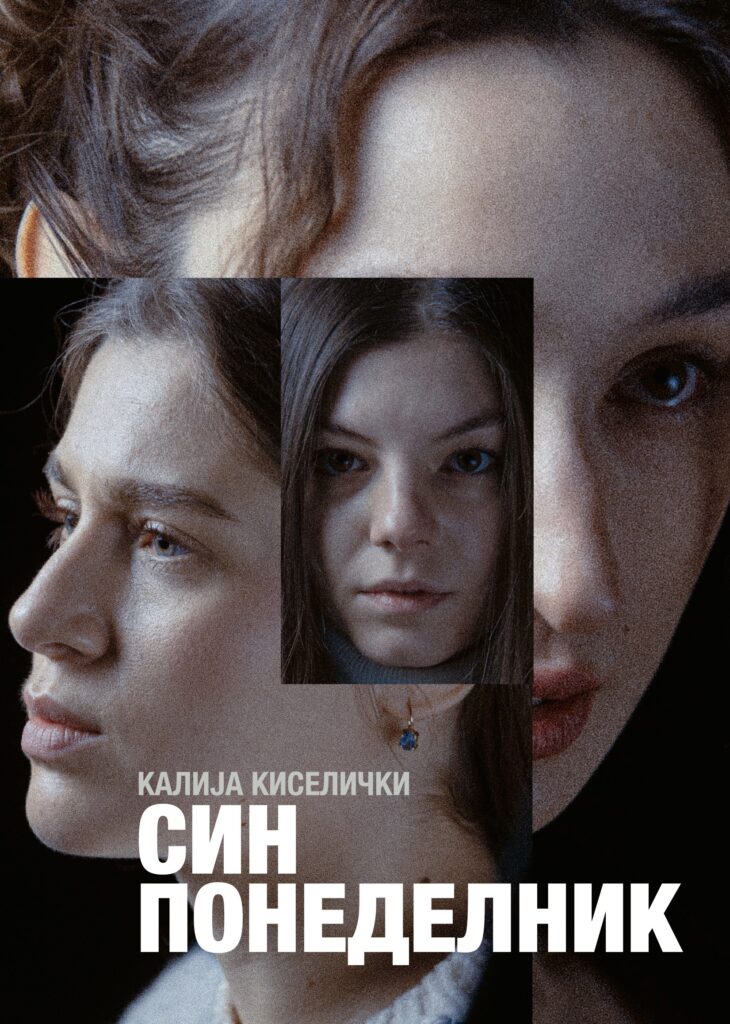
Blue Monday by Kalija Kiselichki is a drama about a contemporary female perspective on life. At one point in the play, the heroine Iva says: “At least think about what you want to do with your life.” This is not accidental — the meaning of the Slavic name Iva symbolizes growth and strength. In this way, Iva’s line becomes a generational epitaph. Women are no longer lost, they no longer wander among the fragments of transgenerational traumas; they have integrated the experiences of their foremothers and decided to live this one and only life fully, as their own and in freedom. A women’s band is not defined by music — it is defined by women. The perspective of ultimate and uncompromising female solidarity is the future of the world.
Kalija Kiselichki also addresses the concept of the “woman as savior”, one of the greatest Balkan myths — the idea that when a woman appears, she comes to rescue. Her angle is fresh and ironic. Her heroines will redirect that energy of saving immature and incapable men somewhere else — just like more and more women we encounter every day. No one has time anymore to rescue the perpetually immature: those stuck in eternal crises of puberty, adolescence, or midlife. There are simply too many beautiful things in the world.
Kiselička also introduces characters named Ken and Barbie, who proclaim that personal contact builds community. She uses the names of famous capitalist dolls — symbols that distorted the aesthetic perception of the world — in order to give them a voice. She does not strip them of their subjectivity. With them we laugh, and we learn that sarma is a legacy of patriarchy — even though we all love eating it.
Questions of education, money, and the distribution of power, which dictate everything, appear in the play with a dose of humor, but also with the belief that these problems can be solved — perhaps even once and for all. A rehearsal space and a bottle of wine become a forum, a contemporary women’s debating club, a space of freedom. This is the space the author has carved out together with her characters, and it remains the most important achievement of this dramatic text.
The history of dramatic literature in this region has only begun to illuminate the space of the female voice over the past thirty years. For centuries, the spotlight of literary history was directed almost exclusively at men, while women were noticed only somewhere between rolling sarma. The drama of Kalija Kiselička confidently rules over humor, subculture, and spaces of freedom. It is entertaining and sharp. It plays with many ideas — from whether Nora ever truly grew up to whether Ken has the right to meditate. This playful orchestration becomes a concert — a new, fresh world waiting for the theatre stage to bring it to life.
Jelena Paligorić Sinkević, dramaturg